

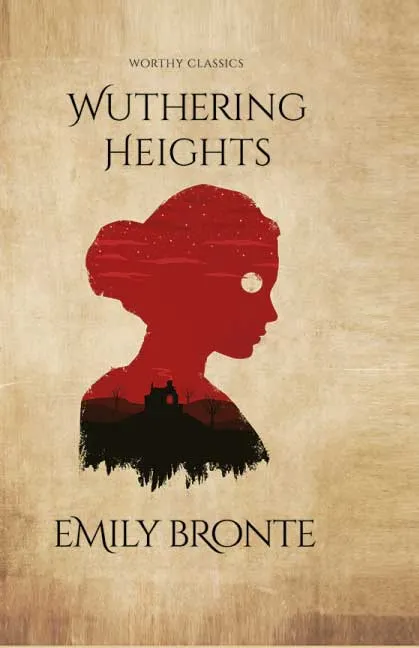
Wuthering Heights by Emily Bronte
0.00 ৳
0.00 ৳
Emily Brontë’s "Wuthering Heights" (1847) is not your typical Victorian romance. It is a dark, wild, and haunting tale of obsession, revenge, and a love so destructive that it transcends death.
While her sisters (Charlotte and Anne) wrote stories that fit more neatly into the social norms of the time, Emily created a masterpiece that feels raw, elemental, and almost supernatural.
The story is set on the bleak, windswept Yorkshire moors and centers on the intense relationship between Catherine Earnshaw and Heathcliff.
The Beginning: Mr. Earnshaw brings home a homeless orphan, Heathcliff. While Catherine forms an inseparable bond with him, her brother Hindley treats him with cruel disdain.
The Betrayal: Catherine loves Heathcliff ("I am Heathcliff," she famously says), but she chooses to marry the refined Edgar Linton for social status.
The Revenge: Heartbroken and humiliated, Heathcliff disappears, only to return years later as a wealthy, polished man. He spends the rest of his life systematically destroying the two families (the Earnshaws and the Lintons) who stood in his way.
Unlike many classics, the protagonists are often difficult to like:
Heathcliff: He is the ultimate "Byronic Hero"—brooding, brilliant, and capable of extreme cruelty. He isn't a "knight in shining armor"; he is a force of nature driven by pain.
Catherine Earnshaw: She is wild, haughty, and deeply conflicted. Her tragedy lies in her attempt to divide her soul between her wild nature (Heathcliff) and her civilized life (Edgar).
Nature vs. Civilization: The two houses in the book represent this conflict. Wuthering Heights is stormy, primitive, and raw, while Thrushcross Grange is calm, orderly, and refined.
Love as Obsession: Brontë explores love not as a domestic comfort, but as a metaphysical connection. Heathcliff and Catherine’s "love" is more like a haunting than a romance.
The Cycle of Trauma: The book shows how the abuse and neglect of one generation (Heathcliff and Hindley) can poison the lives of the next (Cathy, Linton, and Hareton).
The book is famous for its frame narrative. We hear the story through Mr. Lockwood (a confused outsider), who is being told the history by Nelly Dean (the housekeeper).
Note: Nelly is an "unreliable narrator." She has her own biases and may have played a larger role in the tragedies than she admits.
Atmosphere: You can feel the cold wind and the smell of the heather. The moors are as much a character as the people.
Gothic Elements: Ghostly apparitions, feverish dreams, and ancient curses give the book a supernatural edge without ever being a "horror" novel.
Timeless Emotion: It captures the absolute intensity of human feeling in a way that few books ever have.
"Be with me always—take any form—drive me mad! only do not leave me in this abyss, where I cannot find you! Oh, God! it is unutterable! I cannot live without my life! I cannot live without my soul!" — Heathcliff