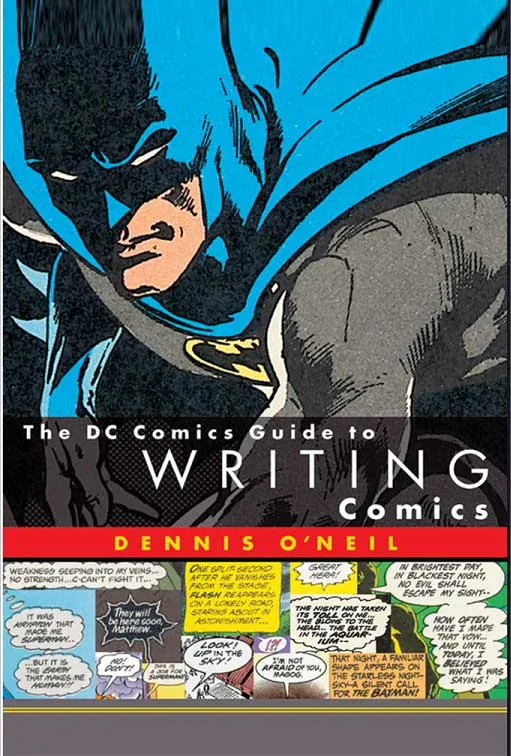
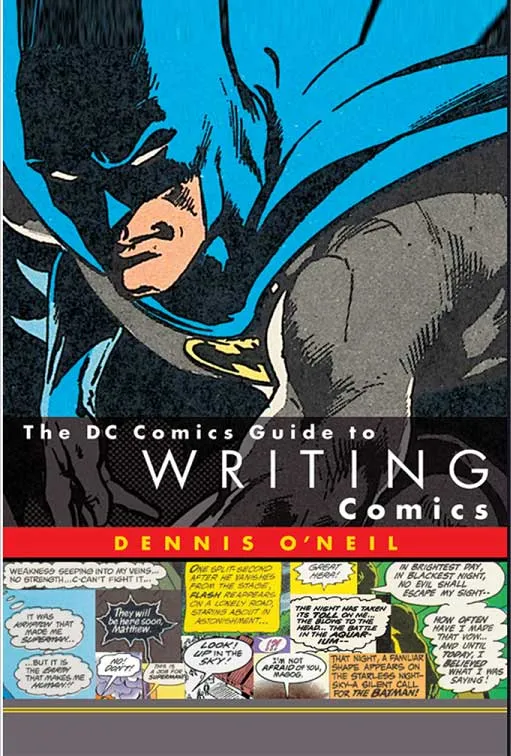
Writing Comics by Dennis O'Neil
0.00 ৳
0.00 ৳
"The DC Guide to Writing Comics" by Dennis (Denny) O'Neil is considered the "gold standard" for anyone looking to transition from prose or screenwriting into the specific, technical world of comic books.
O'Neil was a legendary writer and editor (famous for his work on Batman and Green Lantern/Green Arrow), and his book focuses on the marriage of words and pictures. He treats a comic script not as a finished piece of art, but as a technical manual for the artist.
O'Neil emphasizes that a comic writer is a co-creator. The script must provide enough information for the artist to draw the story, but enough "breathing room" for the artist to contribute their own visual storytelling.
O'Neil breaks down the "building blocks" of a comic story:
The Premise: A one-sentence description of what the story is about. If you can’t summarize it in a sentence, you don't have a story yet.
The Plot: The sequence of events. He famously advocates for the inciting incident to happen as early as possible—often on page one.
The Subplot: Secondary threads that add depth and humanize the characters (e.g., Peter Parker’s money troubles while Spider-Man fights a villain).
This is where the book becomes an essential manual. O'Neil explains the "language" of comics:
The "Rule of Six": He suggests an average of six panels per page. Too many panels make the art cramped and the story hard to follow; too few can make the pacing feel too fast.
Panel Descriptions: How to write clear, concise instructions for the artist. He warns against "impossible panels" (e.g., asking an artist to draw a character changing their mind in a single still image).
Word Count: A crucial rule of thumb—aim for no more than 25 to 35 words per panel. Anything more covers up the art and slows down the "reading eye."
Dialogue vs. Captions: O'Neil teaches when to use a speech bubble and when to use a narrative box (captions). He encourages "showing" through the art and using the "telling" (captions) only for things the art cannot convey, like a character's internal thoughts.
The "Page Turn": He explains how to end a right-hand page with a "mini-cliffhanger" to compel the reader to flip the page and see what happens next.
He outlines the two main ways comics are written:
Full Script: Every panel, every word of dialogue, and every sound effect is written out before the artist starts. (The industry standard today).
The "Marvel Style" (Plot-First): The writer provides a detailed outline, the artist draws the pages, and the writer goes back to add dialogue over the finished art.
Practicality: It’s filled with actual script samples and exercises.
Professionalism: It teaches you the "industry lingo" (e.g., splash pages, gutters, bleeds).
Timeless Advice: Even though it was written decades ago, the rules of visual clarity and narrative tension remain the same.
"In a comic book, if the words and the pictures say the same thing, one of them is unnecessary. Let the pictures do the heavy lifting."