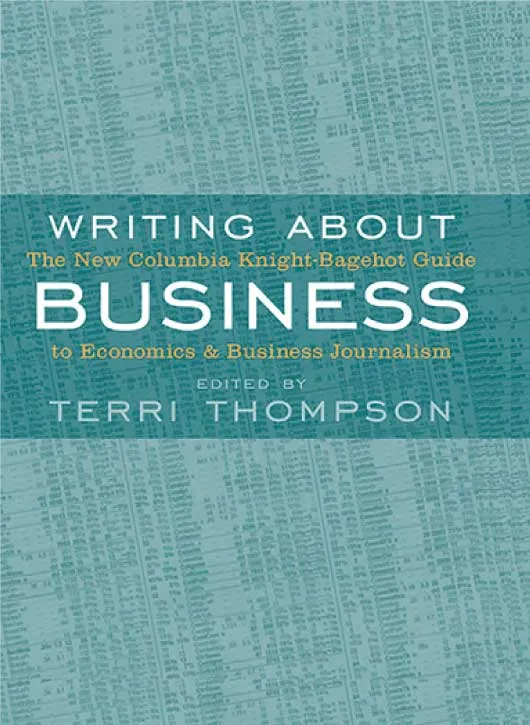
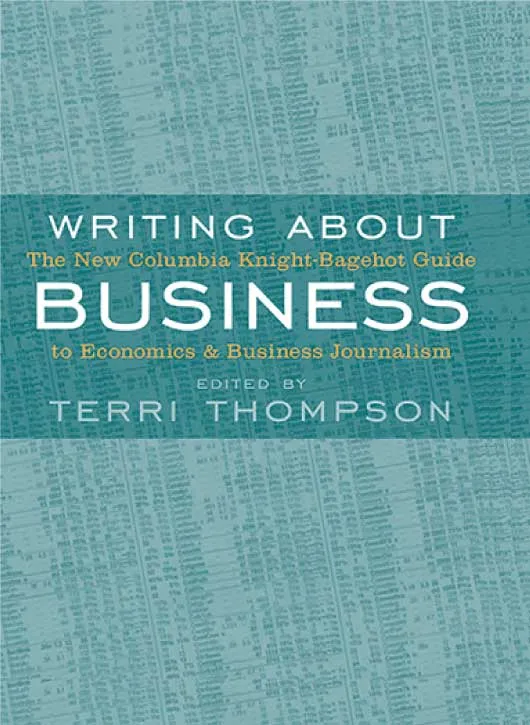
Writing About Business by Terri Thompson
0.00 ৳
0.00 ৳
"Writing About Business: The Columbia Guide to Business Journalism" by Terri Thompson is widely considered the definitive textbook for journalists, students, and professionals who want to translate the "dry" world of numbers into compelling narratives.
Thompson, a veteran editor and director of the Knight-Bagehot Fellowship at Columbia University, provides a roadmap for navigating everything from quarterly earnings reports to complex white-collar crime.
The book’s primary philosophy is that business news is people news. Behind every stock price, merger, or bankruptcy is a human story of ambition, failure, or innovation. Thompson teaches writers how to:
Find the "Hook": Move beyond the data to find how a business decision affects employees, consumers, and the community.
Demystify Jargon: Learn how to explain terms like "EBITDA," "Short-selling," or "Fiduciary Duty" without condescending to the reader or slowing down the story.
The book is structured as a practical manual covering the "bread and butter" beats of business journalism:
The Income Statement & Balance Sheet: How to read a company's financial health. Thompson teaches you what numbers to look for and, more importantly, where companies try to hide their losses.
The SEC Filings: A deep dive into using government documents (like the Form 10-K or 10-Q) to find stories that the company’s PR department isn't talking about.
The Economy: Breaking down macro concepts—inflation, unemployment, and interest rates—into "kitchen table" terms.
A significant portion of the guide is dedicated to skepticism. Thompson emphasizes:
Interviewing the "C-Suite": Strategies for getting honest answers from CEOs and CFOs who are trained to speak in "corporate-speak."
Following the Money: Using public records, lawsuits, and property deeds to track a company's true footprint.
Ethics and Accuracy: Business writing can move markets. The book stresses the immense responsibility of accuracy to avoid "pump and dump" schemes or accidental libel.
Thompson advocates for a specific type of clarity:
The "Inverted Pyramid" for Business: Putting the most critical financial news (the "bottom line") in the first paragraph.
The Nut Graph: Ensuring that by the third or fourth paragraph, the reader knows exactly why this business story matters to their wallet or the world.
Analogies: Using creative comparisons to explain complex economic shifts (e.g., comparing a "liquidity crisis" to a "dried-up well").
For Journalists: It is the industry standard for learning the "business beat."
For Professionals: It helps corporate writers and PR specialists understand what journalists are looking for, allowing for better communication.
For Investors: It provides a "BS detector" for reading annual reports and financial news.
"Never assume your reader knows what a 'basis point' is, but never assume they aren't smart enough to understand it once you explain it."