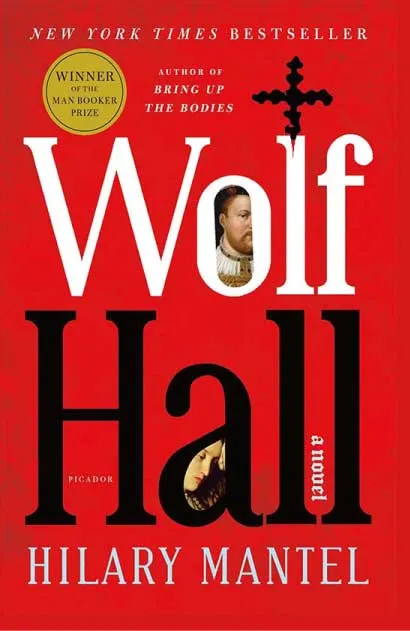
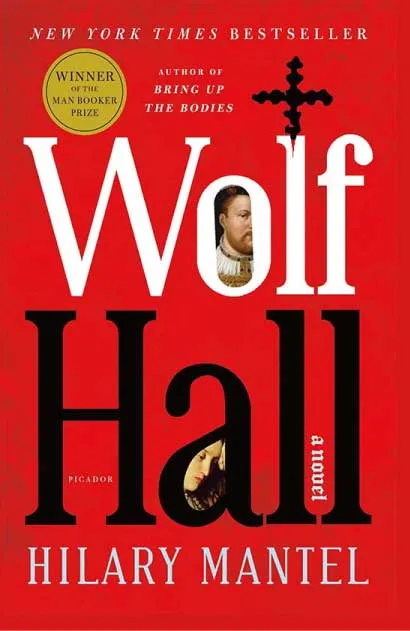
Wolf Hall by Hilary Mantel
0.00 ৳
0.00 ৳
Hilary Mantel’s "Wolf Hall" (2009) redefined the historical fiction genre, winning the Man Booker Prize and becoming a global cultural phenomenon. It is a brilliant reimagining of the rise of Thomas Cromwell, the blacksmith’s son who became the most powerful advisor to King Henry VIII.
While traditional history often paints Cromwell as a cold-blooded villain and his rival, Thomas More, as a saint, Mantel flips the script, giving us a Cromwell who is witty, pragmatic, deeply human, and arguably the first "modern man" in a medieval world.
The story begins with a brutal scene of Cromwell being beaten by his father in Putney and follows his journey across Europe as a mercenary, cloth merchant, and lawyer.
The Legal Mind: Cromwell enters the service of Cardinal Wolsey, the King’s Chancellor. When Wolsey falls from grace for failing to secure Henry’s annulment from Katherine of Aragon, Cromwell is the only one who remains loyal.
The King’s Fixer: Impressed by Cromwell’s competence and loyalty, Henry VIII brings him into his inner circle. Cromwell's task is simple but impossible: break the Church of England away from Rome so the King can marry Anne Boleyn.
Mantel’s Cromwell is a polymath—he speaks multiple languages, understands international finance, remembers every face he sees, and knows how to manipulate the machinery of the state.
The "He": The novel is written in a unique third-person "subjective" style. Mantel often refers to Cromwell simply as "he," forcing the reader to inhabit his physical space and see the world through his calculating eyes.
A Man of the People: Unlike the high-born aristocrats who loathe him, Cromwell values merit, industry, and the protection of his own sprawling household of orphans and clerks.
The Death of the Old World: The book captures the literal "turning of the world" from the medieval religious order to the early modern era of the nation-state and bureaucracy.
Memory and Ghosts: Cromwell is haunted by his past—his violent father, his lost wife and daughters, and the shadow of the fallen Cardinal Wolsey.
Power and Language: Much of the "action" takes place in quiet rooms, through hushed conversations and carefully drafted legal documents. Mantel shows that a pen can be more lethal than a sword.
Present Tense: By writing in the present tense, Mantel makes events from the 1520s feel like they are happening now. The suspense is maintained even though we know the historical outcome.
Sensory Detail: The book is rich with the smells of damp stone, the texture of heavy silks, and the taste of spiced wine. It is a total immersion into Tudor England.
| Figure | Role in Wolf Hall |
| Henry VIII | A charismatic but volatile monarch desperate for a male heir. |
| Anne Boleyn | Sharp, ambitious, and calculating; she is Cromwell’s ally and rival. |
| Thomas More | Portrayed here not as a martyr, but as a rigid, dogmatic persecutor of "heretics." |
| Cardinal Wolsey | Cromwell’s mentor; his downfall is the emotional heart of the first half of the book. |
Wolf Hall is the first book in a masterful trilogy:
Wolf Hall: The rise of Cromwell and the marriage to Anne Boleyn.
Bring Up the Bodies: The swift, brutal downfall of Anne Boleyn.
The Mirror and the Light: Cromwell’s final years and his eventual execution in 1540.
"The fate of peoples is made like this, two men in small rooms. Forget the speeches, the bells, the drums—the world is changed by a signature on a piece of parchment."