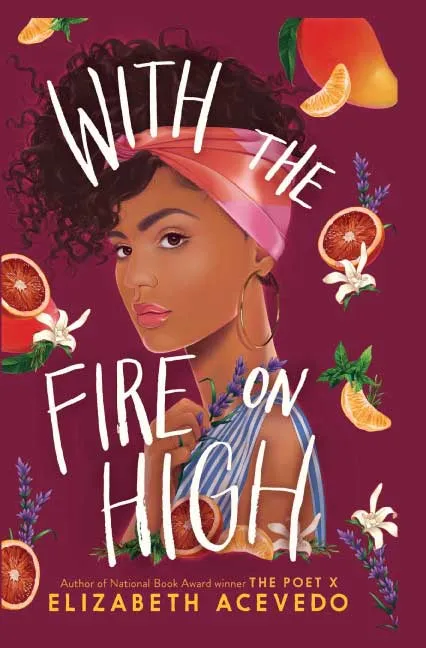
With the Fire on High by Elizabeth Acevedo
0.00 ৳
0.00 ৳
Elizabeth Acevedo’s "With the Fire on High" (2019) is a vibrant, soul-stirring Young Adult novel that balances the harsh realities of teen motherhood with the soaring magic of culinary talent. Acevedo, a National Book Award winner and celebrated slam poet, infuses the prose with a rhythmic, lyrical quality that makes the story feel deeply personal.
Unlike many stories about teen parents, this book isn't a "tragedy"—it is a story of ambition, resilience, and the joy of finding one's calling.
The story follows Emoni Santiago, a high school senior in Philadelphia.
The Responsibility: Emoni is a teen mother to her daughter, Emma (whom she calls "Babygirl"). She lives with her grandmother, 'Buela, and balances school, a part-time job, and the constant judgments of the world.
The Talent: Emoni’s true home is the kitchen. When she cooks, she doesn't just make food; she creates memories and emotions. Her food has a "magical" quality—people who eat it often find themselves transported to their own pasts or overwhelmed with specific feelings.
The Opportunity: Her school starts a new culinary arts elective that includes a trip to Spain. Despite the financial and personal hurdles, Emoni has to decide if she can risk dreaming of a future as a chef.
Intergenerational Family: The relationship between Emoni and 'Buela is the heartbeat of the book. It explores the sacrifices made by women across generations and the friction that comes when a young woman starts to assert her own independence.
Afro-Latinx Identity: Emoni navigates her mixed heritage (Puerto Rican and Black American). This is beautifully reflected in her cooking, where she blends flavors and traditions to create something entirely her own.
The Stigma of Teen Motherhood: Acevedo handles this with immense grace. Emoni is tired of being a "cautionary tale." The book shows her as a capable, loving, and fiercely protective mother who refuses to let her past define her ceiling.
Passion vs. Practicality: The central conflict is whether Emoni can afford to be an artist (a chef) when she has the very real, practical needs of a child to consider.
The book is unique in its structure:
Short, Punchy Chapters: The pacing is fast, reflecting the busy, fragmented life of a student-mother.
Recipes as Memoirs: Interspersed throughout the book are Emoni’s recipes. They aren't just instructions; they are stories. They list ingredients like "a memory of my mother" or "a dash of pride," blending the culinary with the emotional.
Sensory Detail: You can practically smell the garlic, cilantro, and browning butter. It is one of the best "foodie" novels ever written for young adults.
Voice-Driven: Emoni’s voice is authentic, sharp, and vulnerable. She feels like a real person you’d meet on a Philly street corner.
A Different Kind of Romance: While there is a sweet romance with a new student named Malachi, it never overshadows Emoni’s personal growth or her relationship with her daughter.
| Element | Significance |
| The Kitchen | Her sanctuary and the place where she has total control. |
| Spain | Represents the "Grown-up" world of professional cooking and a life beyond her neighborhood. |
| 'Buela | Her anchor, but also a source of tension as Emoni tries to grow up. |
| Babygirl | Her motivation for everything, but also the reason she has to work twice as hard as her peers. |
"The world is a kitchen. Most people are just following the recipe. Emoni is the one creating her own."