What Is Called Thinking by Martin Heidegger
0.00 ৳
0.00 ৳
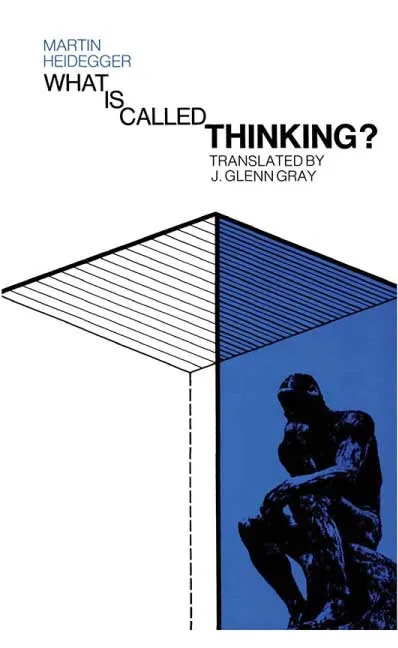
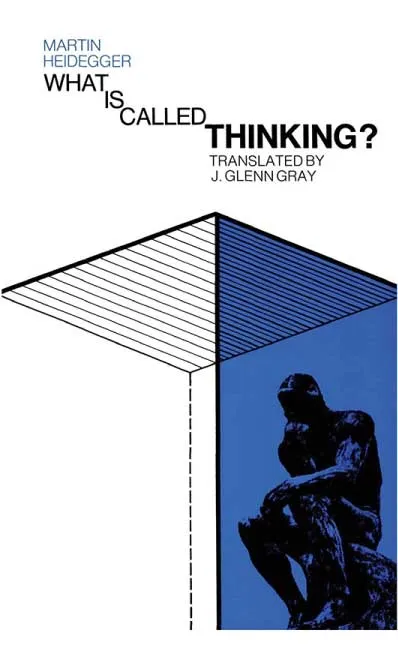
Martin Heidegger’s "What Is Called Thinking?" (Was heißt Denken?, 1954) is based on a series of lectures he delivered at the University of Freiburg. It is one of his most accessible yet provocative late works, famously opening with the stinging critique: "Most thought-provoking in our thought-provoking time is that we are still not thinking."
Heidegger is not interested in "thinking" as logic, IQ, or problem-solving. Instead, he explores thinking as a way of being and listening to the world.
Heidegger structures the book around the ambiguity of the title’s question, "What is called thinking?" He suggests it can be interpreted in four ways:
What is called "thinking" by tradition? (How has philosophy defined it?)
What does the act of thinking require of us? (What is the "recipe" for thought?)
What calls us to think? (What is the external force that demands our attention?)
What is that which commands us into thinking? (The essential "call" of Being.)
One of the book's most famous distinctions is between "Calculative Thinking" and "Meditative Thinking."
Calculative Thinking: This is the thinking of science, business, and technology. it plans, organizes, and treats the world as a "resource" to be used. It is efficient but "homeless."
Meditative Thinking: This is "thinking" in its true sense. It is the ability to dwell on a meaning, to be open to the mystery of things, and to "let beings be."
Heidegger warns that science "does not think" because it follows a set method rather than questioning the very nature of what it studies.
Heidegger dives into the etymology of the Old High German word for thinking, danc.
Thought and Thanks: He argues that "thinking" (Denken) and "thanking" (Danken) share the same root. To truly think about something is to be grateful for its existence.
The Memory (Gedanc): Thinking is a form of "keeping in heart." It is a devoted attunement to what is present.
Heidegger argues that in the modern age, the most essential truths are "withdrawing" from us.
Like a receding tide, the more we try to grab at the world with technology, the more the "essence" of things disappears.
The Pointer: He suggests that a human being is like a "pointer" toward what is withdrawing. We feel the absence of deep thought, and that "feeling of absence" is what should call us to think.
| Concept | Heidegger’s Definition |
| The "Call" | The inherent demand from Being itself that we pay attention. |
| Leap of Thought | We cannot "logically" arrive at thinking; we must leap into a new way of seeing. |
| Unthought | The most important part of any great thinker's work is what they didn't say. |
| Poetry | The closest neighbor to thinking; both use language to "bring things into the light." |
A Challenge to Modernity: It asks if our obsession with "information" has actually made us less capable of "thought."
Language as a "House": Heidegger emphasizes that we don't use language; language uses us. To think is to listen to what language is trying to say through us.
Pedagogy: He famously states that "Teaching is even more difficult than learning... because what teaching calls for is this: to let learn."
"Thinking is not a tool we use to solve problems. Thinking is a path we walk to stay human in a world that wants us to be mere calculators."