We Wept Without Tears by Gideon Greif
0.00 ৳
0.00 ৳
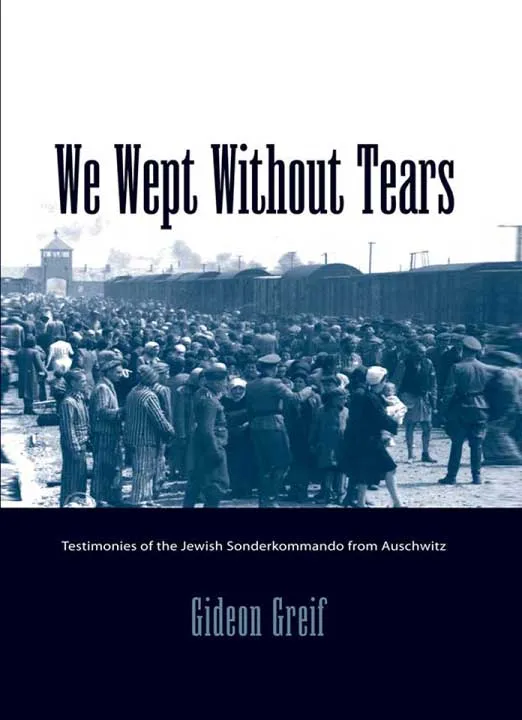
Gideon Greif’s "We Wept Without Tears: Testimonies of the Jewish Sonderkommando from Auschwitz" (originally published in Hebrew in 1999 and translated into English in 2005) is one of the most significant and haunting works of Holocaust historiography.
Greif, an Israeli historian and educator, spent years tracking down the few remaining survivors of the Sonderkommando—the "Special Units" of Jewish prisoners forced by the Nazis to facilitate the machinery of the gas chambers and crematoria.
The Sonderkommando occupied the most agonizing position in the concentration camp hierarchy. Their duties included:
Leading new arrivals into the undressing rooms.
Removing bodies from the gas chambers.
Extracting gold teeth and cutting hair from the deceased.
Operating the ovens and disposing of human ashes.
For decades, these men were often viewed with suspicion or judgment by other survivors. Greif’s book seeks to restore their humanity, framing them not as collaborators, but as the "most miserable victims" of the Third Reich.
The book is primarily composed of eight extensive interviews with survivors. Because the Nazis systematically murdered the Sonderkommando every few months to eliminate witnesses, these eight men represent a miracle of survival.
The Interviews: Greif asks meticulous, technical, and deeply psychological questions. He doesn't just ask about the horrors; he asks about the logistics, the smells, the conversations, and how a human being manages to eat a piece of bread while standing in a room of corpses.
The Narrative Voice: The survivors speak with a chilling, clinical detachment that occasionally breaks into raw grief. This "emotional numbness" is where the title We Wept Without Tears originates—they had reached a point where physical crying was no longer possible.
Borrowing a term from Primo Levi, Greif explores the "Gray Zone"—the space where the line between victim and perpetrator is intentionally blurred by the oppressor. The Nazis forced these men to choose between immediate death or a few more months of life spent in the middle of a nightmare.
The book highlights the Sonderkommando Uprising of October 1944, where prisoners blew up Crematorium IV. Greif shows that resistance wasn't just physical; it was the act of smuggling out notes and buried jars of ashes to ensure the world would eventually know the truth.
Many survivors describe the "death of the soul" that occurred long before they left the camps. They speak of themselves in the third person or as "living robots," illustrating the psychological dissociation required to survive the unsurvivable.
Correction of the Record: Before Greif’s work, many details about the technical operation of the gas chambers were based on Nazi documents or distant observations. This book provides the only first-hand, "insider" technical account of the Final Solution’s mechanics.
The "Buried" Manuscripts: The book discusses the "Scrolls of Auschwitz"—diaries buried in the soil near the crematoria by Sonderkommando members like Zalman Gradowski. Greif uses the interviews to contextualize these haunting written records.
| Aspect | The Sonderkommando Experience |
| Living Conditions | Better food and beds than other prisoners, used as a "bribe" to keep them working. |
| Psychological State | Total isolation; they were "Secret Carriers" (Geheimnisträger) forbidden from speaking to other inmates. |
| Survival Rate | Virtually zero; they were usually gassed every 3–4 months to hide the evidence. |
| Legacy | Their testimonies provided the most damning evidence during the Nuremberg and Frankfurt Auschwitz trials. |
"These men were forced to be the unwilling witnesses to the end of their own people. Greif’s work ensures that we do not look away from their testimony, no matter how much it hurts to hear."