

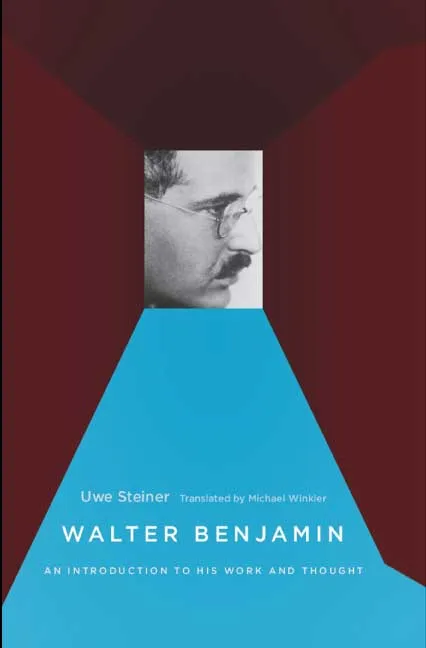
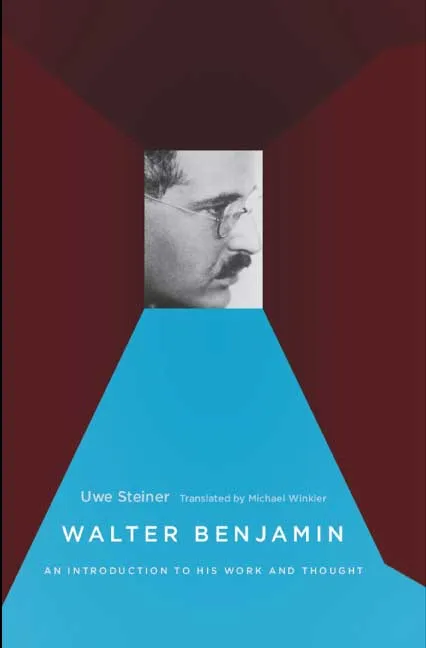
Walter Benjamin
0.00 ৳
0.00 ৳
Walter Benjamin (1892–1940) was a German-Jewish philosopher, cultural critic, and essayist who defied easy categorization. A peripheral member of the Frankfurt School, his work blended Marxist sociology, Jewish mysticism, and aesthetic theory.
He was an "intellectual flâneur"—a wanderer of ideas—who saw the history of the world not as a steady march of progress, but as a "series of catastrophes" piled at the feet of an angel.
This is Benjamin’s most famous essay and a cornerstone of media theory.
The "Aura": Benjamin argued that traditional art has an "aura"—a sense of awe and uniqueness derived from its physical presence in a specific time and place.
The Loss of Aura: When art is mechanically reproduced (via photography or film), the aura decays. The artwork is no longer a unique "cult" object; it becomes a portable, mass-consumed commodity.
The Political Shift: While the loss of aura sounds negative, Benjamin saw a revolutionary potential. If art is no longer "sacred," it can be used for politics (to wake up the masses) rather than being used by fascists to "aestheticize politics."
For the last 13 years of his life, Benjamin worked on this massive, unfinished collection of notes and reflections on 19th-century Paris.
The Architecture of Consumption: He focused on the glass-roofed shopping "arcades" of Paris, seeing them as the birthplaces of modern consumer capitalism.
The Flâneur: He popularized the figure of the flâneur—the urban stroller who observes the city's crowds and detritus without participating in the commerce.
Phantasmagoria: Benjamin used this term to describe the "dream world" of commodities that distracts the public from the reality of their economic conditions.
In his final essay, "Theses on the Philosophy of History" (1940), Benjamin offered a haunting critique of "Progress."
The Angel of History: Inspired by a Paul Klee painting (Angelus Novus), Benjamin described an angel being blown backward into the future by a storm called "Progress," while staring in horror at the wreckage of the past.
Messianic Time: He rejected "homogeneous, empty time" (the idea that history is a straight line). Instead, he believed in "Now-time" (Jetztzeit), where a revolutionary moment can "blast" open the continuum of history to seek justice for the oppressed of the past.
| Term | Definition | Impact |
| Constellation | Bringing past events and present moments together to reveal a hidden truth. | Influenced Post-structuralism. |
| Tactile Appropriation | The way we consume architecture and film through habit and distraction, rather than intense focus. | Foundations of Film Theory. |
| The Storyteller | An essay mourning the loss of the oral tradition, replaced by "information" which lacks the wisdom of experience. | Literary Criticism staple. |
Benjamin’s life was as fragmented as his writing. A collector of rare books and a habitual traveler, he spent much of the 1930s in exile in Paris to escape the Nazi regime.
His end was tragic: while attempting to flee across the Pyrenees into Spain in 1940, he was told his group would be turned back to the Gestapo. Believing there was no escape, he took his own life in the town of Portbou. Ironically, the rest of his group was allowed to pass the next day.
The Digital Age: Benjamin's theories on reproduction are the "blueprint" for understanding how we treat images in the age of the internet, memes, and AI.
Materialist History: He taught us to look at the "trash" of history—the toys, the fashion, the old buildings—to understand the soul of an era.
Technical Architecture: For writers, Benjamin is a master of the fragment. He believed a book could be composed entirely of quotations, allowing the "architecture" of the selected texts to speak for itself.