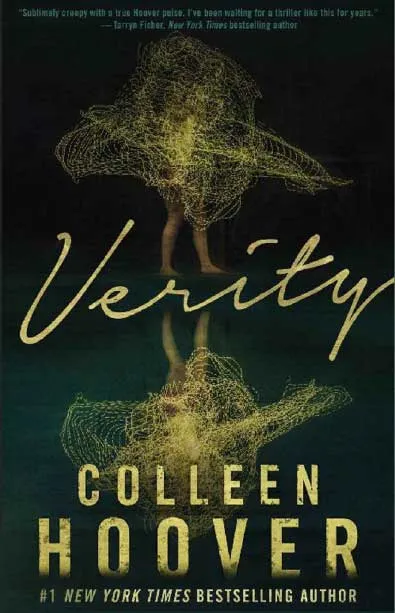
Verity by Colleen Hoover
0.00 ৳
0.00 ৳
Colleen Hoover’s "Verity" (2018) is a polarizing, visceral "romantic thriller" that centers on the blurred lines between fiction, truth, and sociopathy. Unlike Hoover’s typical contemporary romances, this novel leans heavily into the Gothic suspense tradition, utilizing a "found manuscript" trope to build a sense of claustrophobic dread.
The story follows Lowen Ashleigh, a struggling writer who is hired to finish the remaining books in a successful series by Verity Crawford, an author who has been left incapacitated by a horrific car accident.
The narrative architecture is built on a "story within a story." While staying at the Crawford estate to go through Verity’s notes, Lowen discovers a hidden manuscript: So Be It.
The Manuscript: It is a chilling, first-person autobiography where Verity confesses to a series of disturbing thoughts and actions regarding her marriage and her children.
The Conflict: Lowen begins a romantic entanglement with Verity’s husband, Jeremy Crawford, while simultaneously becoming terrified of the "catatonic" woman upstairs. She must decide whether to show Jeremy the manuscript and destroy his memory of his wife, or keep it secret to protect him.
The book functions as a psychological chess match where every player's "truth" is suspect:
Lowen Ashleigh: The outsider. Her own history of sleepwalking and social anxiety makes her an unstable lens through which we view the Crawford house.
Jeremy Crawford: The "grieving" husband. He is portrayed as the perfect, long-suffering victim, but his intense reactions raise questions about what he truly knows.
Verity Crawford: The villain (or the victim?). Through the manuscript, she is depicted as a manipulative, even murderous mother. In the physical world, she is a silent, haunting presence.
The "Madwoman in the Attic": Hoover modernizes the Brontë-esque trope of the hidden, dangerous wife. The house itself—isolated and filled with the shadows of deceased children—acts as a character.
Creative Writing as Therapy vs. Weapon: The book explores whether writing is a way to purge "dark thoughts" or a way to document a dark reality.
The Nature of Truth: The central question of the novel is whether the written word is more "real" than the physical person.
The fame of Verity rests almost entirely on its final pages, which introduce a piece of evidence that contradicts the entire book.
The Manuscript vs. The Letter: Lowen finds a letter from Verity claiming that the autobiography was merely a writing exercise—a way to practice writing from the perspective of a villain to improve her "antagonist" craft.
The Moral Ambiguity: This leaves the reader with a permanent "choose your own adventure" ending. Is Verity a monster who committed the acts, or a brilliant writer who was framed by her own creative exercises?
As someone interested in the architecture of writing, you might notice how Hoover uses specific techniques to maintain tension:
Juxtaposition: Hoover alternates chapters of Lowen's present-day experience with chapters from Verity’s manuscript. The contrast between the "quiet" house and the "screaming" prose of the manuscript creates a constant sense of unease.
Sensory Horror: The book uses visceral, often uncomfortable physical descriptions—nursing injuries, the smell of the house, the "stare" of a catatonic woman—to anchor the psychological thriller in the body.
| Team | Belief | Evidence |
| Team Manuscript | Verity was a sociopath who killed her children. | The level of detail in the autobiography; her behavior when she thought no one was looking. |
| Team Letter | Verity was an innocent woman being gaslit by Jeremy. | Her claim that the writing was an exercise; Jeremy's oddly convenient "saves" throughout the story. |
"No one is more observant than a writer. But no one is better at hiding in plain sight than a writer, either."