

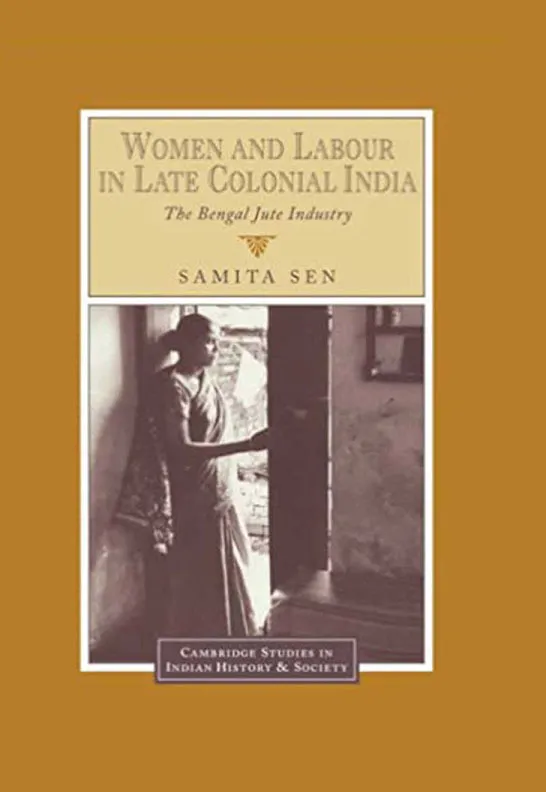
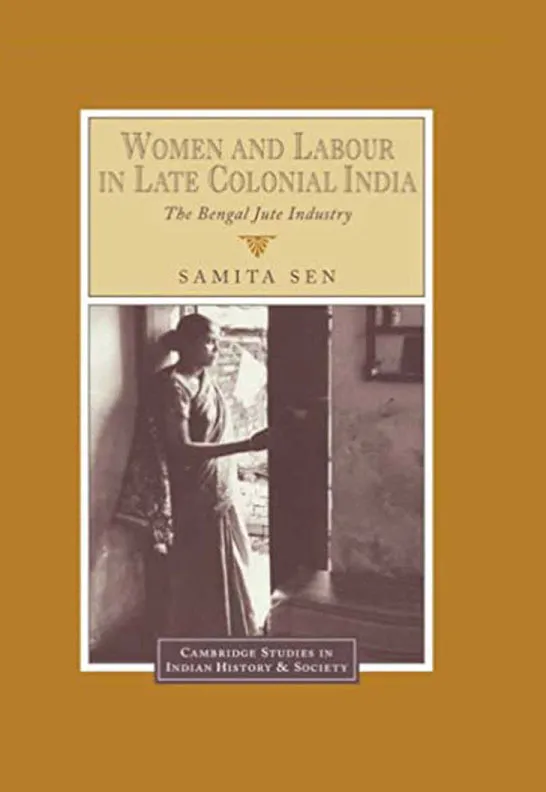
Women & Labour Late Colonial India by Samita Sen
0,00 ৳
0,00 ৳
Samita Sen’s "Women and Labour in Late Colonial India: The Bengal Jute Industry" (1999) is a seminal work in South Asian labor history and gender studies. It challenges the traditional, male-centric narratives of the industrial revolution in India by focusing on the specific experiences of women in the Bengal jute mills between the late 19th century and the mid-20th century.
Sen argues that the marginalization of women in the workforce was not an accident of "progress," but a deliberate result of both colonial economic interests and local patriarchal structures.
Sen explores how the colonial state and industrial employers used the concept of the "family" to control women's labor.
The Myth of the Supplementary Earner: Employers treated women’s wages as "supplementary" to a male breadwinner, justifying lower pay. In reality, many women were the primary or sole providers for their households.
The Recruitment Paradox: While mills needed cheap labor, they also relied on traditional social structures. This meant that women were often recruited through male intermediaries (sardars), placing them in a position of double dependency—on the employer and the male kin or recruiter.
Agrarian Crisis and Migration: Sen tracks how the decline of the rural economy in Bihar and Uttar Pradesh forced women to migrate to the jute mills of Bengal. Unlike men, who often maintained links to their village land, women who migrated were frequently escaping domestic collapse, widowhood, or poverty, making them more vulnerable.
The "Protective" Legislation: Sen analyzes how colonial labor laws (like the Factory Acts) that supposedly "protected" women by limiting their hours or banning night shifts actually served to push them out of high-paying jobs and into the unorganized, less regulated sectors.
Motherhood and the Factory: The book examines the tension between a woman’s role as a "mother" (reproducer of the next generation of labor) and her role as a "worker." The lack of childcare and maternity benefits was a tool used to keep the female workforce transient and unorganized.
One of the most critical sections of the book deals with the Trade Union movement:
Male-Dominated Resistance: Sen points out that even when labor unions rose to fight the British mill owners, they often ignored the specific demands of women.
The Gendered Strike: Male workers and union leaders often viewed women's participation as a threat to "domestic stability" or as a way for employers to undercut male wages, leading to a lack of solidarity across gender lines.
Intersectional Analysis: It was one of the first major works to successfully weave together class, gender, and colonialism without prioritizing one over the others.
Primary Source Depth: Sen utilizes factory records, census data, and colonial administrative reports to reveal the "invisible" numbers of women workers that were often omitted from official tallies.
Reframing the "Subaltern": It gives a voice to the migrant woman worker, portraying her not just as a victim of Empire, but as an active agent navigating a complex web of social and economic pressures.
| Factor | Impact on Women Workers |
| Wage Policy | Institutionalized lower pay based on the "male breadwinner" model. |
| Legislation | Reduced women's employability in the formal mill sector. |
| Urban Housing | Slum conditions (bustees) created unique safety and health risks for women. |
| Marriage | Industrialization led to changes in dowry and marriage patterns among the laboring poor. |
"Samita Sen demonstrates that the history of Indian industry is not just a story of machines and markets, but a story of how gender was 'constructed' to serve the needs of colonial capital."