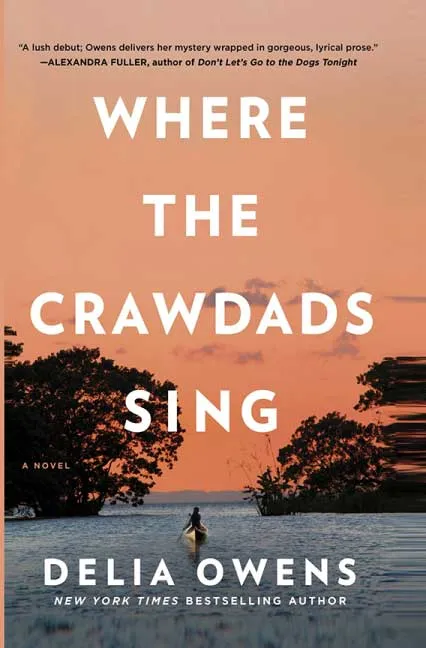
Where The Crawdads Sing by Delia Owens
0,00 ৳
0,00 ৳
Delia Owens’ "Where the Crawdads Sing" (2018) is a global phenomenon that spent a record-breaking 191 weeks on the bestseller list. Part coming-of-age story, part murder mystery, and part celebration of the natural world, the novel is a lush and atmospheric exploration of isolation and survival.
Set in the marshes of North Carolina between the 1950s and 60s, it tells the story of the "Marsh Girl" and the secrets she keeps.
The narrative follows Kya Clark, who is abandoned by her family at age six and forced to survive alone in a shack in the wilderness.
The Survivalist: Kya grows up with the gulls as her family and the sand as her teacher. She becomes an expert naturalist, collecting and documenting the flora and fauna of the coast.
The Social Outcast: To the residents of nearby Barkley Cove, Kya is a myth and a menace—the "Marsh Girl." Her isolation is a choice forced upon her by the town’s prejudice.
The Mystery: The book opens in 1969 with the discovery of the body of Chase Andrews, the town’s "golden boy," at the base of a fire tower. The timeline jumps between the investigation of his death and Kya’s life leading up to that moment.
Nature vs. Nurture: Owens, a real-life wildlife scientist, uses the marsh as a mirror for human behavior. Kya learns about life, death, and mating not from society, but from observing the "crawdads" and fireflies.
The Pain of Isolation: The book is a profound study of loneliness. Kya’s deep desire for connection leads her into complicated relationships with two very different men: Tate Walker and Chase Andrews.
Prejudice and Class: The town’s treatment of Kya reflects the harsh social hierarchies of the American South. Because she lives in the swamp and doesn't attend school, she is automatically seen as "less than" and inherently suspicious.
Female Agency: Despite her circumstances, Kya is not a victim. She transforms her hobby of collecting shells and feathers into a professional career as a published author and illustrator.
The novel is masterfully structured to keep the reader guessing:
The Past (1952–1969): Focuses on Kya’s childhood, her education at the hands of Tate, and her romantic entanglements.
The Present (1969–1970): Follows the murder trial of Kya Clark, as the town looks for someone to blame for the death of their favorite son.
Sensory Prose: Owens’ writing is thick with the smells of salt air, the sound of cicadas, and the feeling of mud between toes. The marsh is a character in its own right.
Poetry as a Bridge: Poetry plays a significant role in the book. It is the language through which Kya processes her emotions and her connection to the people who left her.
| Feature | Tate Walker | Chase Andrews |
| Connection to Kya | Teaches her to read; shares her love for science. | Views her as a conquest; a secret "escape." |
| Relationship Dynamic | Based on mutual respect and intellectual growth. | Based on physical attraction and power. |
| Impact | Breaks her heart by leaving, but gives her the tools to survive. | Brings the danger of the "civilized" world to her doorstep. |
The book appeals to a wide audience because it hits several "sweet spots" in storytelling:
It satisfies the craving for a gripping mystery.
It provides a sweeping romance.
It offers a tribute to the wilderness, reminding readers of the raw, unsentimental beauty of the natural world.
"Go as far as you can—way out yonder where the crawdads sing." — It is a call to return to a place where nature is the only judge and where the rules of man no longer apply.