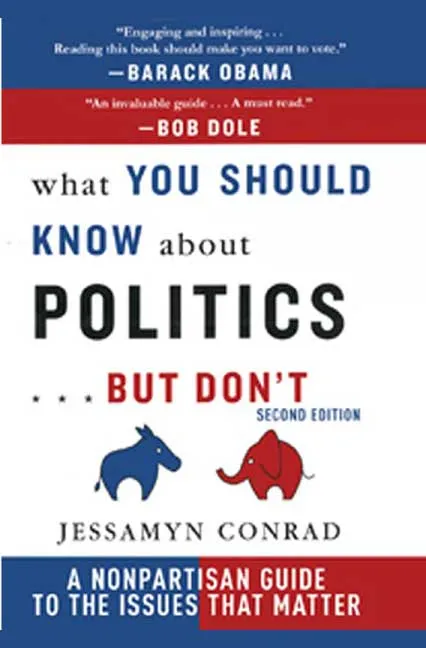
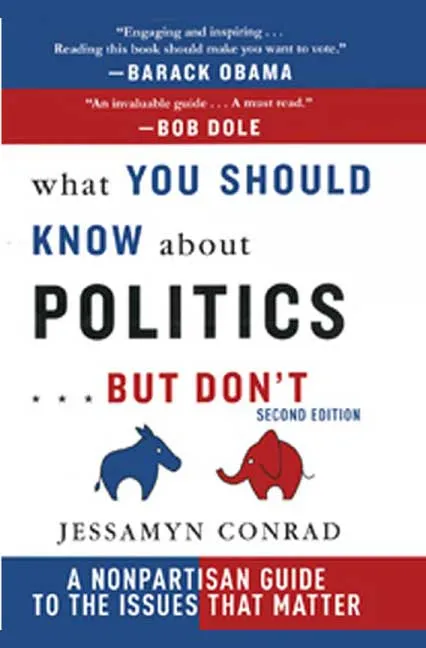
What You Should Know About Politics by Jessamyn Conrad
0,00 ৳
0,00 ৳
Jessamyn Conrad’s "What You Should Know About Politics... But Don't" (originally published in 2008 and frequently updated) is widely regarded as the "non-partisan bible" for American voters. In an era of extreme polarization and 24-hour news cycles, Conrad provides a neutral, fact-based guidebook that breaks down the most complex issues facing the United States.
The book is designed for the "rationally frustrated" citizen—someone who wants to understand the arguments on both sides without the filter of pundits or political parties.
The most striking feature of Conrad’s work is its commitment to the "Point/Counterpoint" format. For every major issue, she presents:
The Problem: A historical and factual overview of the topic.
What Democrats (or Liberals) Believe: The core arguments and proposed solutions from the left.
What Republicans (or Conservatives) Believe: The core arguments and proposed solutions from the right.
The Current Reality: The actual laws in place and the roadblocks to change.
The book acts as a modular reference guide. You don't need to read it cover-to-cover; you can jump to the specific "briefing" you need:
The Economy: Explanations of the national debt, the Federal Reserve, and the differing philosophies on taxation (Trickle-down vs. Bottom-up).
Healthcare: A breakdown of the Affordable Care Act (Obamacare), universal healthcare, and the role of private insurance.
Energy and Environment: The debate over climate change, fossil fuels vs. renewables, and the "Green New Deal."
Foreign Policy: America’s role in global conflicts, foreign aid, and the influence of international bodies like the UN and NATO.
Social Issues: Concise summaries of the legal and moral debates surrounding abortion, gun control, and LGBTQ+ rights.
Before diving into the "hot button" topics, Conrad provides a "Civics 101" refresher that many adults find surprisingly helpful:
The Three Branches: How the Legislative, Executive, and Judicial branches check each other.
The Electoral College: Why a candidate can win the popular vote but lose the presidency.
The Role of Money: How lobbying, Super PACs, and campaign finance laws influence who gets elected and what laws get passed.
Combating Misinformation: By using non-partisan data from sources like the Congressional Budget Office (CBO), Conrad helps readers cut through social media "rage-bait."
Empathy Through Understanding: By clearly stating the logic behind the opposing side's view, the book helps readers understand that political disagreements are often based on different fundamental values (e.g., Liberty vs. Equity).
Empowering the Voter: The final sections often include practical advice on how to verify information, contact representatives, and participate in local elections.
| Feature | Typical Liberal View | Typical Conservative View |
| Role of Government | A tool to ensure social justice and a safety net. | A limited entity meant to protect individual liberty. |
| Regulation | Necessary to protect consumers and the environment. | Often seen as a "job killer" that stifles innovation. |
| Taxes | Progressive (the wealthy should pay more). | Lower across the board to encourage investment. |
| Social Change | Embraces rapid change to address systemic inequality. | Values tradition and incremental, stable change. |
"Politics isn't a sport where you pick a team and root for them blindly; it's a series of complex choices about how we want to live together. Knowledge is the only way to make those choices count."