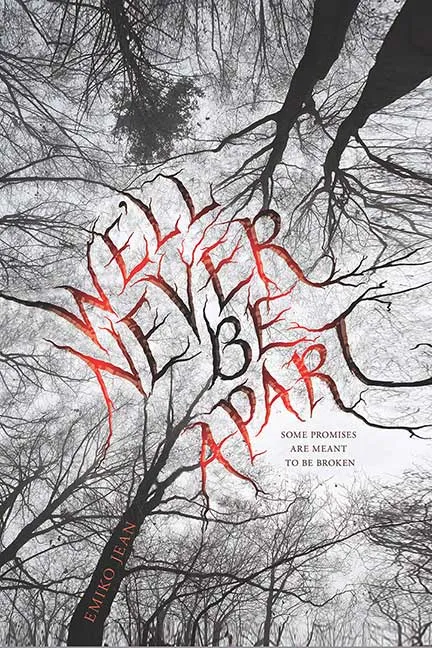
We'll Never Be Apart by Emiko Jean
0,00 ৳
0,00 ৳
Emiko Jean’s "We'll Never Be Apart" (2015) is a haunting, psychological thriller that explores the blurred lines between twinhood, trauma, and the fragmented nature of memory. Set primarily within the clinical, suffocating walls of a mental health ward, the novel is a "puzzle-box" mystery where the narrator's reliability is constantly in question.
The story is a dark, visceral descent into the bond between two sisters—one who burns and one who bleeds.
The story follows Alice Monroe, who wakes up in the psych ward of Savage Isle after a catastrophic fire that killed her boyfriend, Jason.
The Twin: Alice’s twin sister, Celli, is also at the facility. According to Alice, Celli has always been the "dark" twin—unstable, violent, and obsessed with Alice.
The Narrative: The book is structured through Alice’s present-day experiences in the ward and her secret journal entries that recount the sisters' traumatic childhood in the foster care system.
The Goal: Alice is convinced that Celli started the fire that killed Jason. Her mission is to prove Celli’s guilt to the doctors so she can finally be free of her sister’s shadow.
The "Twin" Connection: The novel plays with the "creepy twin" trope but grounds it in psychological depth. It examines how an intense sibling bond can become a "prison" of shared identity.
Unreliable Narration: This is a hallmark of the book. As Alice recounts her history, the reader begins to notice discrepancies. The "truth" is treated as a shifting target, filtered through Alice’s grief and mental instability.
Systemic Trauma: The flashbacks to various foster homes paint a grim picture of how the system fails vulnerable children, creating the "monsters" that society later fears.
Revenge and Justice: Much of the tension comes from Alice’s cold, calculated desire for vengeance against those she believes harmed her and her sister.
The use of the journal is a critical literary device in the novel.
It provides a "story within a story," allowing Emiko Jean to build world-class suspense.
It contrasts the vulnerable, younger Alice with the hardened, institutionalized Alice of the present.
It serves as the primary evidence for the reader to decipher what actually happened the night of the fire.
| Character | Role / Perception | The Reality |
| Alice | The "Good" Twin; the victim of Celli’s whims. | Highly observant, vengeful, and emotionally scarred. |
| Celli | The "Bad" Twin; prone to "blackouts" and arson. | Viewed almost entirely through Alice's biased perspective. |
| Chase | A fellow patient at Savage Isle. | Becomes Alice’s ally and a potential love interest, offering her a glimpse of a life outside the ward. |
| Jason | The deceased boyfriend. | His death is the "inciting incident" that haunts every page of the book. |
Atmospheric Setting: Savage Isle is depicted as a gothic, modern-day fortress. The isolation of the island mirrors the isolation of Alice’s mind.
The "Twist": Without spoiling the ending, the book is famous for a massive third-act revelation that forces the reader to re-evaluate every single chapter that came before it.
Gory Realism: Emiko Jean does not shy away from the physical reality of self-harm, fire, and the clinical coldness of psychiatric treatment.
"They say twins have a special bond. But what they don't tell you is that sometimes a bond is just another word for a noose."