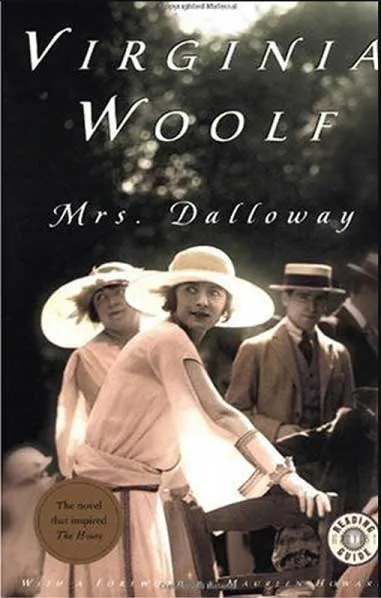
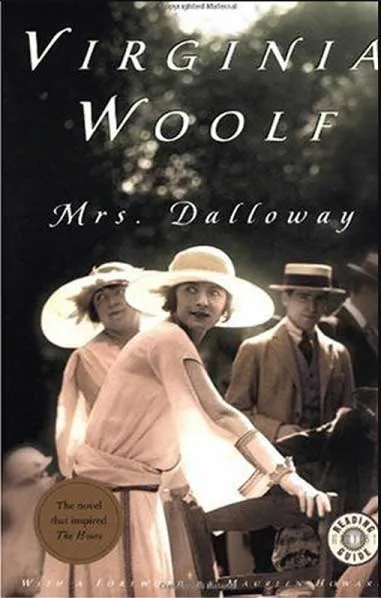
Virginia Woolf by Mrs. Dalloway
0,00 ৳
0,00 ৳
While Virginia Woolf is the author and Mrs. Dalloway (1925) is her most famous creation, the relationship between the two is so profound that the book is often treated as a psychological map of Woolf’s own mind.
In Mrs. Dalloway, Woolf perfected her "Stream of Consciousness" technique, moving away from traditional plot architecture toward what she called "the luminous halo"—the semi-transparent envelope of consciousness that surrounds us from the beginning of life to the end.
Woolf uses a high-wire technical constraint: the entire novel takes place over one day in June in post-WWI London.
The Structure: The "spine" of the book is the ticking of Big Ben. As the clock strikes, it anchors the floating thoughts of the characters back to the physical world.
The "Tunnelling" Process: Woolf described her writing method as digging "caves" behind her characters. These caves eventually connect underground, allowing the reader to see how different people—who never meet—are linked by shared history and the city itself.
Woolf originally intended for Clarissa Dalloway to die at the end of the book. Instead, she created a "double": Septimus Warren Smith, a shell-shocked veteran.
Clarissa: Represents the "social" self—perfectly composed, hosting a party, navigating the upper-class world of Westminster.
Septimus: Represents the "inner" self—fractured by trauma, hearing voices, unable to communicate with a world that wants him to just "be normal."
The Connection: Clarissa and Septimus never meet, but his suicide at the end of the day serves as a release for Clarissa, allowing her to embrace the beauty and terror of her own existence.
| Technique | Description | Impact |
| Stream of Consciousness | Recording the "random" flow of thoughts, memories, and sensations. | Creates an intimate, almost intrusive sense of the character's soul. |
| Free Indirect Discourse | A third-person narrative that adopts the tone and "voice" of the character it's following. | Blurs the line between the narrator and the character. |
| The "Moment of Being" | Intense flashes of awareness where a character feels the "wholeness" of life. | Provides the emotional peaks in an otherwise "ordinary" day. |
Writing in 1925, Woolf was hyper-aware of the "Social System."
The Death of Empire: The book is haunted by the Great War. Even as Clarissa buys flowers, the sound of a car backfiring (which people mistake for a gun) reminds everyone of the fragile peace.
Critique of Medicine: Through the characters of the doctors (Sir William Bradshaw and Dr. Holmes), Woolf launches a scathing attack on the "proportion" and "conversion" methods used to treat mental illness—methods she personally suffered under.
As someone interested in the technical craft of writing, you may find Woolf’s diaries from this period particularly insightful. She wrote:
"I dig out beautiful caves behind my characters; I think that gives exactly what I want; humanity, humour, depth. The idea is that the caves shall connect and each comes to daylight at the present moment."
She was deliberately breaking the "Materialist" style of writers like Arnold Bennett, arguing that a writer’s job isn't to describe the buttons on a coat, but the flicker of a thought.
"Mrs. Dalloway said she would buy the flowers herself." — This famous opening line isn't just about a chore; it’s an assertion of agency. In Woolf’s world, the smallest domestic act is as epic as a battle in the Iliad.